



Infrastructure optimized for growth

35+
Networks Supported

25ms
Avg Processing Time

25,000+ rq/s
Enterprise-ready

100+ TB
of Big Data

 Sign in

Access to full transaction data on all transactions & addresses

Retrieve blockchain data, balances, and transactions

Detailed blockchain history and transaction data for any address.

Full smart contracts metadata, including token symbols & token names

Access to full transaction data on all transactions & addresses

Get live crypto prices, exchange rates, supply and token contracts across protocols via one REST API.

Real-time notifications for events on top blockchains. Response under 100ms.

AML address screening across 35+ networks

Sync and manage HD wallets, keys and addresses

Local signing for EVM, UTXO, Tron, XRP, Kaspa and Solana

Precise blockchain transaction fee estimates based on transaction priority

Broadcast and verify transactions with real-time monitoring

Prepare EVM transactions, including token transfers

Test EVM transactions, optimize gas fees and identify security flaws

Pay for HTTP APIs, or charge for your own, in USDC stablecoin over the open x402 protocol — non-custodial, on-chain settlement.

MCP servers, CLI and skills for AI agents

Dedicated nodes infrastructure for leading blockchains using JSON-RPC

Address validation, encoding & cryptographic tasks optimizations

Shared node infrastructure for top blockchains using JSON-RPC.

Jun 9, 2026 • 4 min

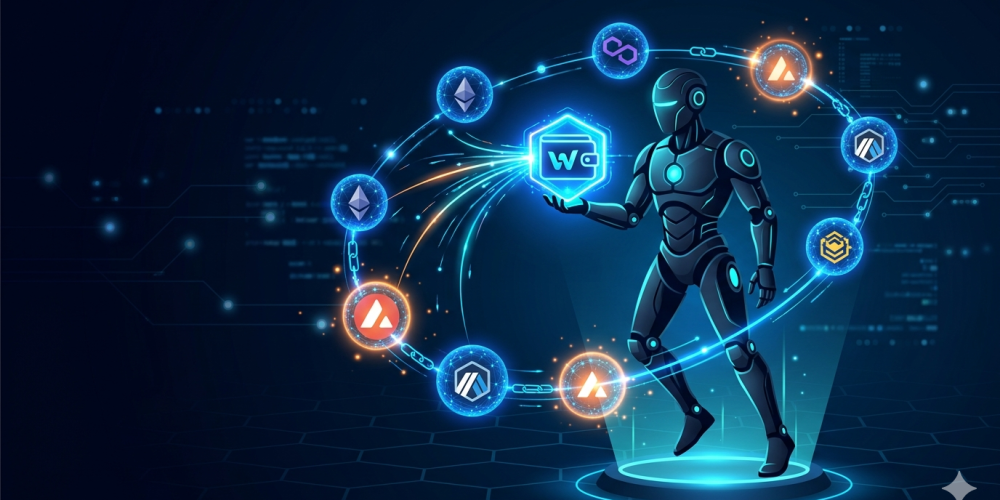
On June 8, 2026, MetaMask — the world's most widely used crypto wallet with over 30 million monthly active users — launched Agent Wallet in early access. The announcement marks a defining moment for Web3 developers: autonomous AI agents can now hold, manage, and deploy capital on-chain with self-custodial control across 25+ EVM-compatible blockchains, including Hyperliquid.
This isn't just a MetaMask product story. It's a signal about where the entire blockchain developer ecosystem is heading — and what the infrastructure beneath agentic workflows needs to look like.
Agent Wallet is MetaMask's first wallet layer built specifically for autonomous software rather than human users. It supports swaps, perpetual futures, prediction markets, and liquidity provisioning — all executable by AI agents without human-in-the-loop approval for routine operations.
The security architecture is layered: every transaction passes through transaction simulation, Blockaid-powered threat scanning, and MEV protection before execution. Transactions flagged as potentially malicious require human approval via two-factor authentication. MetaMask also covers safe transactions through its Transaction Protection program — up to $10,000 per user.
Developers can configure agents in two modes:
Agent Wallet integrates with leading AI frameworks including OpenAI Codex, Claude Code, Nous Research Hermes Agent, and Cursor — making it immediately accessible to development teams already building with these tools.
The launch reflects a broader industry shift. Base launched an MCP Agent Gateway in May for AI-driven DeFi portfolio management. Fireblocks released an agentic payments suite targeting fintechs. ZeroDev and Coinbase are also addressing agent-wallet use cases from different layers of the stack.
The common thread: agents need reliable, programmable blockchain infrastructure beneath them. A wallet is only as good as the data and services supporting it. When agents are executing transactions autonomously at scale, the quality of on-chain data, event notifications, fee estimation, and transaction simulation becomes mission-critical.
This is where Crypto APIs' product suite becomes directly relevant to teams building agentic workflows.
Building an AI agent that interacts with blockchain isn't just about the wallet layer. Agents need a reliable data and event layer beneath them. Here's how Crypto APIs' infrastructure maps directly to agentic use cases:
MetaMask's Agent Wallet runs transaction simulation as a core security feature. Developers integrating agents into their own applications can replicate this with Crypto APIs' Transaction Simulator — test EVM transactions before broadcasting, optimize gas fees, and surface security flaws before they become costly on-chain errors. For autonomous agents making high-frequency decisions, this is non-negotiable.
Agents need to react to on-chain events as they happen — not seconds later. Blockchain Events from Crypto APIs delivers real-time notifications for transactions, address activity, and block confirmations with sub-100ms response times across top blockchains. This is the trigger layer that keeps agentic loops running efficiently.
Crypto APIs offers AI Compatibility infrastructure — 14 MCP servers and an n8n MCP client node — that connects blockchain data directly to Claude, Cursor, and other AI agent frameworks. This means the same frameworks that MetaMask Agent Wallet integrates with can pull live on-chain data, address balances, and transaction histories natively through your agent's context window.
Once an agent has decided to execute, it needs reliable transaction broadcasting with confirmation monitoring. Broadcast Transactions from Crypto APIs lets you broadcast and verify transactions with real-time monitoring — ensuring agents know exactly when a transaction is finalized without polling indefinitely.
Agent Wallet routes potentially malicious transactions to human review. For teams building their own compliance layer on top of agentic wallets, Verify Address provides AML, sanctions, and fraud screening across 35+ networks — a critical safeguard when agents are autonomously interacting with unknown counterparties.
Gas cost optimization matters at scale. Blockchain Fees delivers precise transaction fee estimates based on transaction priority — so agents can dynamically adjust fee strategies without overpaying or timing out in high-congestion environments.
Agents need context to make decisions — wallet balances, transaction histories, and contract metadata. Address Latest and Address History give agents instant access to current and historical on-chain data for any address, while Contracts delivers full smart contract metadata including token symbols and names — essential when agents are operating across protocols they haven't been explicitly programmed for.
MetaMask Agent Wallet supports 25+ EVM chains out of the gate. Agents built for the agentic economy aren't chain-specific — they need to operate wherever the opportunity or instruction leads them. Crypto APIs supports 100+ blockchain networks via both Dedicated Nodes and Node as a Service, giving development teams the multi-chain foundation to deploy agents that can follow capital and data across the entire EVM ecosystem and beyond.
The MetaMask Agent Wallet launch is early access — a broader release is planned for later in 2026. That window is an opportunity for builders to get ahead of the curve. Teams that want to integrate agentic wallet infrastructure into their own products should be thinking about:
All of these capabilities are available today through the Crypto APIs product suite. Whether you're integrating with MetaMask Agent Wallet or building your own agent-wallet stack from scratch, the infrastructure layer is ready.
MetaMask Agent Wallet signals that the agentic economy is moving from concept to production infrastructure. For blockchain developers, the question is no longer whether AI agents will manage on-chain capital — it's how well-equipped the infrastructure beneath those agents will be when they do.
Start building your agentic blockchain stack with Crypto APIs → Explore the full product suite
Networks Supported
Avg Processing Time
Enterprise-ready
of Big Data


 Copy link