



Infrastructure optimized for growth

35+
Networks Supported

25ms
Avg Processing Time

25,000+ rq/s
Enterprise-ready

100+ TB
of Big Data

 Sign in

Access to full transaction data on all transactions & addresses

Retrieve blockchain data, balances, and transactions

Detailed blockchain history and transaction data for any address.

Full smart contracts metadata, including token symbols & token names

Access to full transaction data on all transactions & addresses

Get live crypto prices, exchange rates, supply and token contracts across protocols via one REST API.

Real-time notifications for events on top blockchains. Response under 100ms.
AML address screening across 35+ networks

Sync and manage HD wallets, keys and addresses

Local signing for EVM, UTXO, Tron, XRP, Kaspa and Solana

Precise blockchain transaction fee estimates based on transaction priority

Broadcast and verify transactions with real-time monitoring

Prepare EVM transactions, including token transfers

Test EVM transactions, optimize gas fees and identify security flaws
Pay for HTTP APIs, or charge for your own, in USDC stablecoin over the open x402 protocol — non-custodial, on-chain settlement.

MCP servers, CLI and skills for AI agents

Dedicated nodes infrastructure for leading blockchains using JSON-RPC

Address validation, encoding & cryptographic tasks optimizations

Shared node infrastructure for top blockchains using JSON-RPC.

May 12, 2026 • 2 min

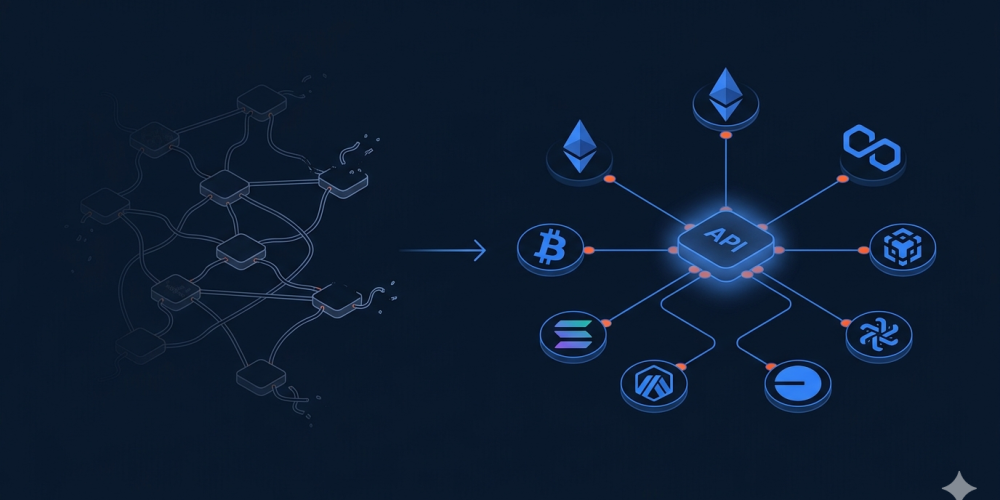
The Graph's subgraph deprecation notices and escalating query costs have pushed dozens of engineering teams to evaluate alternatives in 2026. If your indexing pipeline is tightly coupled to a single protocol, you're one sunset away from a production incident. Here's how to migrate cleanly — and build something more resilient on a unified multi-chain data layer.
The migration pain is real: subgraphs require GraphQL schema maintenance, re-indexing windows that can span days on busy chains, and a cost model that punishes high-frequency queries at scale. Teams running analytics dashboards or transaction monitoring across 5+ chains report spending 30–40% of backend engineering cycles just keeping subgraph indexes healthy.
The root problem isn't GraphQL — it's the tight coupling between your data model and a single indexing layer that doesn't scale horizontally across chains. Every new chain means another subgraph, another schema, another set of re-indexing nightmares.
The migration pattern that works in practice is straightforward:
Crypto APIs covers 35+ networks — including EVM-compatible chains like Berachain's Polaris EVM — with unified endpoints for address transactions, token transfers, and block data. You're not rewriting schema per chain; you're querying a normalized data model across all of them. That alone eliminates the most time-consuming part of multi-chain subgraph maintenance.
Here's the direct mapping most teams use during migration:
Practical steps for the final switch:
Teams typically complete this migration in under two weeks for a single-chain setup. For a 10-chain setup, the unified API model means you're not multiplying that effort by 10 — you're doing it once. Monitor query latency during the parallel run; most teams see p99 latency drop significantly when moving off shared subgraph infrastructure to dedicated API endpoints.
Explore the full Crypto APIs technical documentation and start your multi-chain migration today. If you'd rather talk it through with our team first, get in touch with our team.
Networks Supported
Avg Processing Time
Enterprise-ready
of Big Data


 Copy link