



Infrastructure optimized for growth

35+
Networks Supported

25ms
Avg Processing Time

25,000+ rq/s
Enterprise-ready

100+ TB
of Big Data

 Sign in

Access to full transaction data on all transactions & addresses

Retrieve blockchain data, balances, and transactions

Detailed blockchain history and transaction data for any address.

Full smart contracts metadata, including token symbols & token names

Access to full transaction data on all transactions & addresses

Get live crypto prices, exchange rates, supply and token contracts across protocols via one REST API.

Real-time notifications for events on top blockchains. Response under 100ms.

AML address screening across 35+ networks

Sync and manage HD wallets, keys and addresses

Local signing for EVM, UTXO, Tron, XRP, Kaspa and Solana

Precise blockchain transaction fee estimates based on transaction priority

Broadcast and verify transactions with real-time monitoring

Prepare EVM transactions, including token transfers

Test EVM transactions, optimize gas fees and identify security flaws

Pay for HTTP APIs, or charge for your own, in USDC stablecoin over the open x402 protocol — non-custodial, on-chain settlement.

MCP servers, CLI and skills for AI agents

Dedicated nodes infrastructure for leading blockchains using JSON-RPC

Address validation, encoding & cryptographic tasks optimizations

Shared node infrastructure for top blockchains using JSON-RPC.

Jan 16, 2026 • 4 min

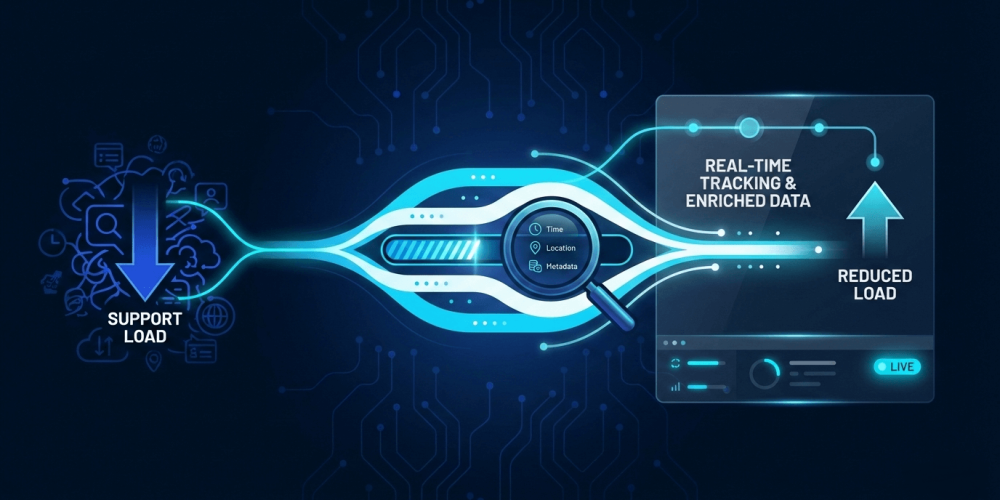
When users ask, “Where is my transaction?” they rarely want a generic answer. They want specifics - transaction status, timestamps, fees, participating addresses, and a clear explanation of what happened. For exchanges, wallets, fintech platforms, and institutions, these questions can quickly turn into a support bottleneck, especially during high-volume periods.
This is a data problem more than a support problem. If your product can present accurate, detailed blockchain transaction data in real time (and also retrieve historical transaction data when needed), you can reduce repetitive tickets, speed up investigations, and improve transparency for end users and internal teams.
Crypto APIs Transactions Data is designed to provide detailed transaction data for any provided transaction, including participating addresses, with instant retrieval and easy integration for developers and businesses.
Transaction-related support requests typically spike when:
In practice, a single missing detail can create back-and-forth communication. A support agent asks engineering, engineering checks a transaction explorer, someone screenshots details, and the user still wants a clear status update.
Enterprises need a repeatable way to answer transaction questions with precision, without routing every case through engineering.
That requires structured access to the core transaction fields teams rely on:
To reduce support load and increase trust, transaction visibility should work for three audiences at once:
Users should see transaction details in a format that matches what they care about:
Support teams need a consistent way to pull the same facts every time, without manual blockchain lookups.
Many businesses also need to analyze transaction flows over time for reporting and operational decision-making.
Crypto APIs Transactions Data is built to deliver detailed, real-time blockchain transaction information and supports retrieving comprehensive information related to any provided transaction, including participating addresses.
A practical way to think about Transactions Data is as a reliable transaction details layer you can embed into your platform.
Instead of showing only a transaction hash and amount, you can pull structured transaction data that includes participating addresses and core transaction fields used for tracking and review (status, timestamps, fees, amounts, wallet addresses).
This supports clearer:
Crypto platforms often lose trust when transaction updates feel delayed or unclear. Real-time transaction information helps teams keep user-facing pages aligned with what’s happening on-chain.
This is especially important for:
Transactions Data can be used for enhanced analytics and reporting, helping businesses create detailed reports, monitor transaction flows, and gain insight into patterns and trends using accurate and timely data.
That matters for teams building:
If you want a straightforward, high-ROI implementation, start with one page in your product: a transaction details view.
A strong enterprise-grade transaction details page typically includes:
Then add two internal features:
This approach doesn’t require changing your wallet architecture. It improves how quickly your business can interpret and explain transaction activity.
Transactions Data is positioned for multiple outcomes that matter to enterprise teams:
Monitoring transaction activities can help teams detect and prevent fraudulent actions and illicit activities, supporting compliance-focused processes where reliable transaction visibility is required.
Platforms can deliver more transparent user experiences by providing accurate transaction tracking and reducing uncertainty around transfers.
Instead of treating transaction investigation as a manual task, teams can standardize how transaction details are retrieved and reviewed.
Transaction visibility is one of the easiest areas to improve customer trust and reduce operational load - but only if your platform can consistently retrieve the details that users and teams ask for: transaction status, timestamps, fees, wallet addresses, amounts transferred, and participating addresses.
Crypto APIs Transactions Data is designed to provide detailed transaction data with instant retrieval and easy integration, helping developers and businesses track and analyze blockchain activity efficiently and accurately.
If you’re building transaction pages, support tooling, or reporting pipelines, the next step is to map your most common transaction questions to the specific transaction fields your teams need - then standardize those lookups using a single integration approach.
Networks Supported
Avg Processing Time
Enterprise-ready
of Big Data





 Copy link