



Infrastructure optimized for growth

35+
Networks Supported

25ms
Avg Processing Time

25,000+ rq/s
Enterprise-ready

100+ TB
of Big Data

 Sign in

Access to full transaction data on all transactions & addresses

Retrieve blockchain data, balances, and transactions

Detailed blockchain history and transaction data for any address.

Full smart contracts metadata, including token symbols & token names

Access to full transaction data on all transactions & addresses

Get live crypto prices, exchange rates, supply and token contracts across protocols via one REST API.

Real-time notifications for events on top blockchains. Response under 100ms.

AML address screening across 35+ networks

Sync and manage HD wallets, keys and addresses

Local signing for EVM, UTXO, Tron, XRP, Kaspa and Solana

Precise blockchain transaction fee estimates based on transaction priority

Broadcast and verify transactions with real-time monitoring

Prepare EVM transactions, including token transfers

Test EVM transactions, optimize gas fees and identify security flaws

Pay for HTTP APIs, or charge for your own, in USDC stablecoin over the open x402 protocol — non-custodial, on-chain settlement.

MCP servers, CLI and skills for AI agents

Dedicated nodes infrastructure for leading blockchains using JSON-RPC

Address validation, encoding & cryptographic tasks optimizations

Shared node infrastructure for top blockchains using JSON-RPC.

Jul 15, 2026 • 4 min

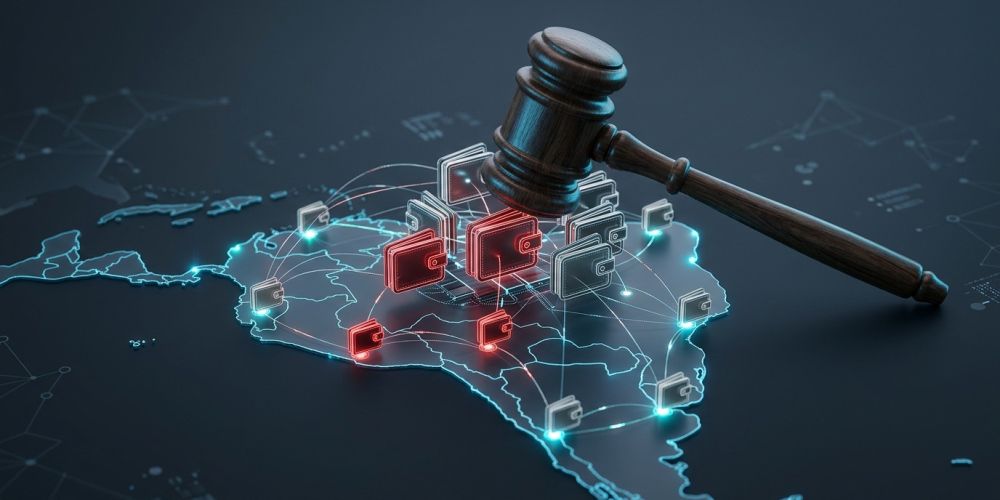
An Argentine federal judge has ordered the identification and freezing of 25 cryptocurrency wallets linked to the LIBRA memecoin scandal. For compliance teams at exchanges and custody platforms, this case illustrates why programmatic cross-exchange wallet screening is no longer optional. The order affects wallets across multiple centralized exchanges, requiring coordinated identification of wallet holders tied to an alleged $250 million fraud.
Federal Judge María Servini issued the order in late January 2026 as part of an ongoing investigation into the LIBRA token collapse. The case centers on allegations that insiders promoted the memecoin—briefly endorsed by Argentine President Javier Milei on social media—before executing coordinated sell-offs that wiped out retail investors. Investigators estimate losses exceed $250 million USD.
The 25 flagged wallets span multiple exchanges operating in Argentina and internationally. Judge Servini's order requires exchanges to identify account holders, freeze assets, and preserve transaction histories. Argentine prosecutors are working with the country's Financial Information Unit (UIF) to trace fund flows and identify beneficiaries.
This is not the first enforcement action tied to LIBRA. Earlier investigations had already flagged several wallets, but this order expands the scope significantly. The case has drawn international attention because it demonstrates how quickly judicial authorities in emerging markets are adopting blockchain forensics in fraud investigations.
For development teams building exchanges, custody solutions, or payment processors, this case highlights three operational realities.
First, wallet identification requests are becoming routine. Exchanges operating in Latin America—or serving users in those jurisdictions—must be prepared to respond to judicial orders that require rapid wallet-to-identity mapping. Manual processes do not scale when an order covers 25 wallets across multiple platforms with tight response deadlines.
Second, cross-chain and cross-exchange tracing is now a baseline expectation. The LIBRA investigation involves wallets that interacted with multiple centralized exchanges and on-chain addresses. Prosecutors expect exchanges to provide not just account holder information, but transaction graphs showing fund movements. Teams without programmatic access to address history data across chains will struggle to comply.
Third, Anti-Money Laundering (AML) screening at the wallet level is essential before judicial orders arrive. The wallets flagged in this case were already known to blockchain analytics firms. Exchanges that screen incoming and outgoing addresses against sanctions lists and fraud databases can identify risk exposure before regulators come knocking.
This is not unique to Argentina. The Financial Action Task Force (FATF) Travel Rule requires Virtual Asset Service Providers (VASPs) to collect and transmit originator and beneficiary information for transactions above certain thresholds. MiCA regulations in the EU impose similar requirements. The LIBRA case shows these frameworks are now being tested in real enforcement scenarios.
Compliance teams should treat this case as a template for future enforcement actions. Several patterns are worth noting.
Judicial orders increasingly target wallet addresses, not just user accounts. Prosecutors identified on-chain addresses first, then requested exchanges to map those addresses to account holders. This inverts the traditional Know Your Customer (KYC) workflow. Teams need infrastructure that supports reverse lookups—starting from an on-chain address and tracing it back to internal account records.
Response times are compressed. Argentine law enforcement expects exchanges to respond within days, not weeks. Platforms without automated compliance pipelines will face operational strain. The ability to query wallet addresses against sanctions lists, fraud databases, and internal records in near real-time is now a competitive requirement.
Cross-border coordination is increasing. The LIBRA case involves exchanges registered in multiple jurisdictions. Prosecutors in Argentina are coordinating with counterparts in other countries. Exchanges must ensure their compliance infrastructure can generate audit-ready reports that satisfy multiple regulatory frameworks simultaneously.
For teams building compliance tooling, the technical requirements are clear. Address screening must cover 35+ networks. Sanctions and fraud database updates must propagate within hours, not days. Query latency matters—sub-100ms response times for address lookups enable real-time screening in transaction flows. Webhook-based event infrastructure allows teams to trigger compliance checks automatically when flagged addresses interact with their platforms.
The LIBRA case also underscores why custody providers need wallet-level risk scoring. Custodians holding assets on behalf of institutional clients cannot afford to discover—via a judicial order—that their wallets have interacted with addresses tied to fraud. Proactive screening is the only defensible approach.
The LIBRA investigation is ongoing. Prosecutors have indicated they expect to expand the list of flagged wallets as blockchain forensics reveal additional fund flows. Exchanges operating in Latin America should monitor developments closely.
More broadly, this case signals that judicial authorities in emerging markets are becoming sophisticated blockchain investigators. Argentina, Brazil, and Mexico have all pursued high-profile crypto fraud cases in the past 18 months. Compliance teams should expect similar enforcement patterns in other jurisdictions.
The regulatory trajectory is clear. Wallet-level AML screening, rapid response to judicial orders, and cross-chain transaction tracing are no longer advanced capabilities. They are baseline requirements for any platform handling user funds.
Crypto APIs provides unified APIs for blockchain data, address screening, and wallet management across 35+ networks. Teams building compliant crypto infrastructure can start with a free tier—no credit card required—at cryptoapis.io.
Networks Supported
Avg Processing Time
Enterprise-ready
of Big Data





 Copy link