


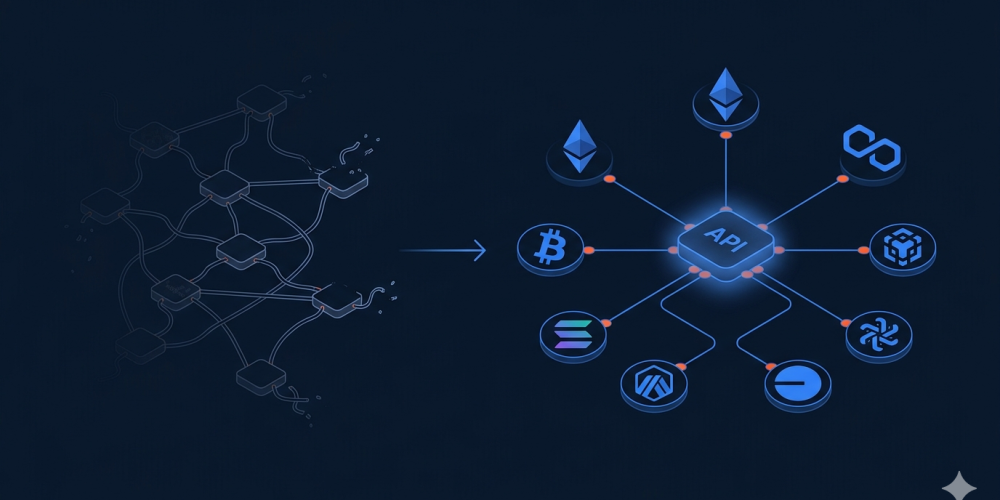
The Graph's subgraph deprecation notices and escalating query costs have pushed dozens of engineering teams to evaluate alternatives in 2026. If your indexing pipeline is tightly coupled to a single protocol, you're one sunset away from a production incident. Here's how to migrate cleanly — and build something more resilient on a unified multi-chain data layer.
Why teams are leaving subgraphs in 2026
The migration pain is real: subgraphs require GraphQL schema maintenance, re-indexing windows that can span days on busy chains, and a cost model that punishes high-frequency queries at scale. Teams running analytics dashboards or transaction monitoring across 5+ chains report spending 30–40% of backend engineering cycles just keeping subgraph indexes healthy.
The root problem isn't GraphQL — it's the tight coupling between your data model and a single indexing layer that doesn't scale horizontally across chains. Every new chain means another subgraph, another schema, another set of re-indexing nightmares.
A cleaner architecture: decouple ingestion from query
The migration pattern that works in practice is straightforward:
- Map your existing subgraph entity schema to REST or WebSocket equivalents.
- Stand up a parallel feed using a multi-chain blockchain data API to validate parity.
- Cut over read traffic incrementally by route.
Crypto APIs covers 35+ networks — including EVM-compatible chains like Berachain's Polaris EVM — with unified endpoints for address transactions, token transfers, and block data. You're not rewriting schema per chain; you're querying a normalized data model across all of them. That alone eliminates the most time-consuming part of multi-chain subgraph maintenance.
The endpoints that replace your subgraph
Here's the direct mapping most teams use during migration:
- Address activity & balances — swap subgraph entity queries for the Address Latest product (real-time activity, 1-block confirmation) and Address History for full Genesis-onward backfills.
- Token & NFT transfers — covered by Address History and the Contracts Data endpoint for symbols, decimals, and supply metadata.
- Block-level analytics — the Block Data endpoint returns timestamps, miner details, gas usage, and uncle blocks across chains.
- Transaction tracing — use Transactions Data for inputs/outputs, internal transactions, and cross-chain swap detail.
- Real-time event listeners — replace subgraph event handlers with Blockchain Events webhooks (sub-100 ms delivery, no node maintenance).
The cutover playbook
Practical steps for the final switch:
- Replace subgraph event listeners with Blockchain Events webhook subscriptions for on-chain triggers.
- Move historical backfills to paginated REST calls against Address History and Transactions Data.
- Retire your subgraph node infrastructure and reclaim the engineering cycles.
Teams typically complete this migration in under two weeks for a single-chain setup. For a 10-chain setup, the unified API model means you're not multiplying that effort by 10 — you're doing it once. Monitor query latency during the parallel run; most teams see p99 latency drop significantly when moving off shared subgraph infrastructure to dedicated API endpoints.
Get started
Explore the full Crypto APIs technical documentation and start your multi-chain migration today. If you'd rather talk it through with our team first, get in touch with our team.